25 years later, panel reflects on Catholic Bishops’ “Economic Justice for All” pastoral letter
Posted by: Kathleen Soriano-Taylor in News, Vox Populi, tags: Economics, U.S. Conference of Catholic Bishops
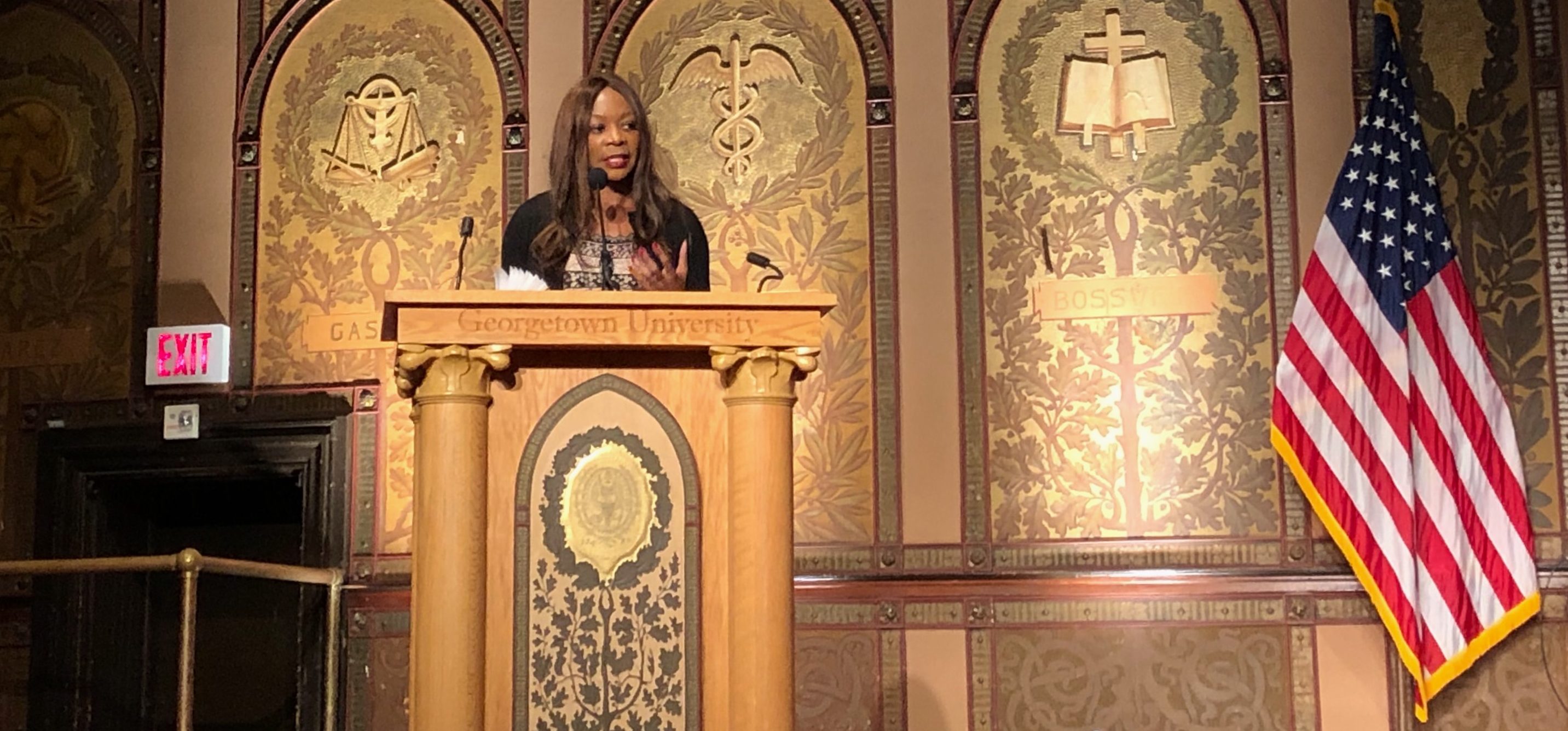
Yesterday afternoon, the Berkley Center for Religion, Peace, and World Affairs hosted a roundtable discussion on the US Conference of Catholic Bishops’ pastoral letter, “Economic Justice for All,” in light of the document’s 25th anniversary. Discussing the relevance of the letter both in its original context and that of the present, the focus of the panel turned to the role of America’s Catholic bishops in today’s social, political, and economic realms.
The panelists were E.J. Dionne, a professor at Georgetown’s Public Policy Institute and a columnist for the Washington Post, Ross Douthat, an Op-Ed columnist with the New York Times, Christine Firer Hinze, a professor of Christian ethics at Fordham University and the director of the Francis and Ann Curran Center for American Catholic Studies, and Rev. Robert Sirico, a Roman Catholic priest and founder and president of the Acton Institute. Professor Tom Banchoff, the director of the Berkley Center, moderated the roundtable.
The pastoral letter, written in 1986, focused on Catholic Social Teaching and how its core principles of the common good, the universal destination of goods and solidarity interact with America’s capitalist system. In five chapters, the letter critiques the American economy both by acknowledging its achievements and highlighting its shortcomings. The most discussed and criticized chapter is the third, which is an analysis of the American economy that offers specific policy proposals in regards to unemployment, poverty, food and agriculture distribution, and international development.
The speakers at yesterday’s discussion centered the conversation on the bishops’ authority to make policy suggestions. While all panelists agreed on what Douthat referred to as the bishops’ “policy naiveté,” they disagreed about the extent to which the bishops overstepped in their pastoral letter.
Although the letter created room for important dialogue concerning the role of moral values in the marketplace, it seemed apparent to all that the bishops risked what ecclesiastical authority they had in making specific suggestions that fell flat. According to Douthat, “Well-meaning public policy isn’t effective public policy.”


Entries (RSS)