Posts Tagged “Town Hall”

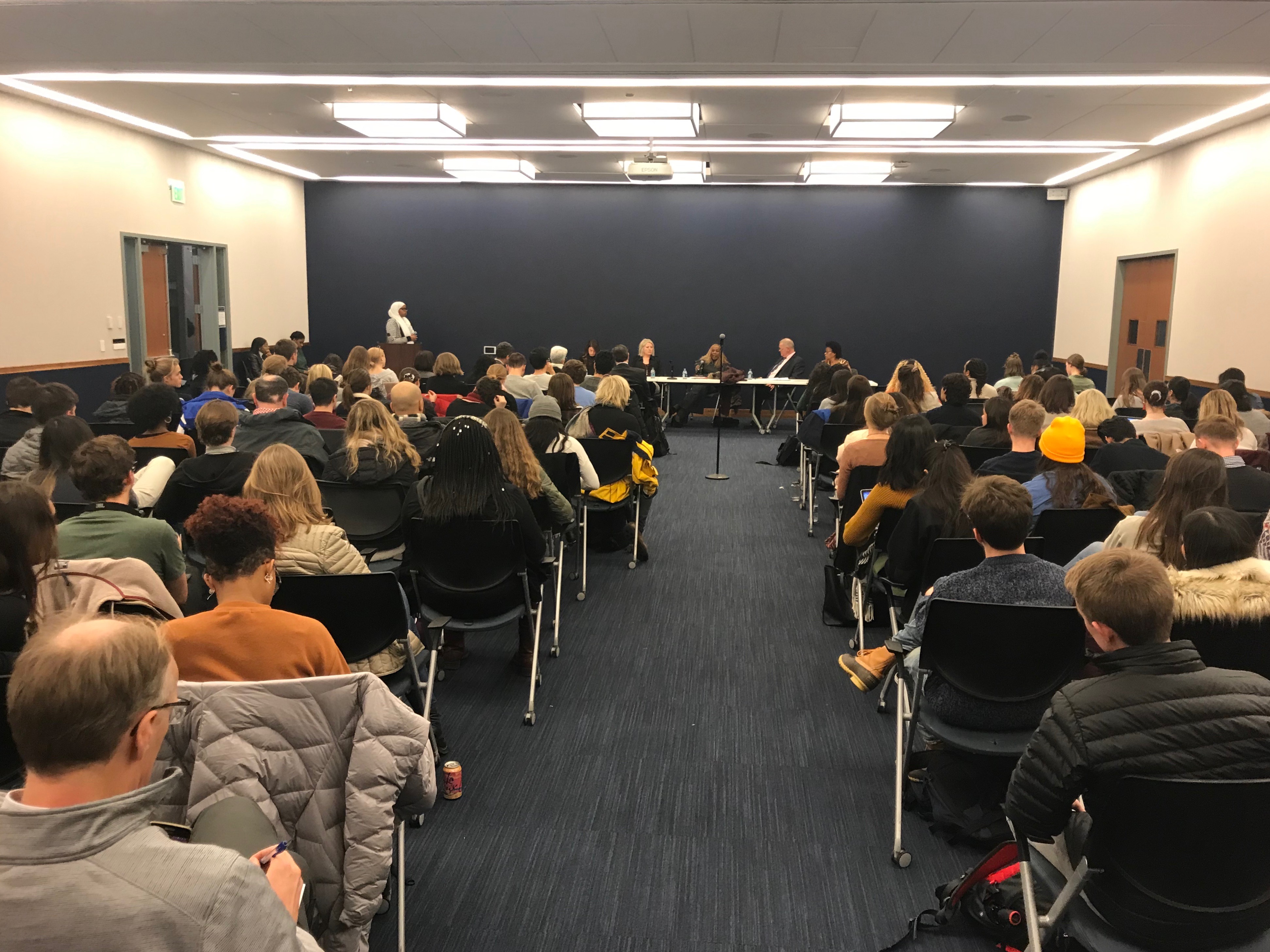
At 6 p.m. on Monday evening, GUSA held the first-ever conference-call town hall, providing students with the opportunity to voice their concerns and ask questions on the recent campus plan agreement. In an effort to make up for the lack of student representation in campus plan negotiations, GUSA President Clara Gustafson (SFS ’13) and Vice President Vail Kohnert-Yount (SFS ’13) organized the discussion as a formal way to provide information to students about the effects of the plan on student life. Gustafson began by introducing President John J. DeGioia, followed by remarks by Vice-President of Student Affairs Todd Olson. After a brief presentation, students were asked for their questions. Here are the highlights.

DeGioia: The undergraduate program will stay on the main campus. We learned of the long-term plans for Georgetown to build a satellite campus from the agreement last week. According to the documents, the University will locate at least 1,000 students in the School of Continuing Studies at one or more satellite locations “not within the zip code 20007” by the start of 2014. It was unclear,  however, whether undergraduates would eventually be housed or take classes at another location. DeGioia explained that, for Georgetown to grow, it would need to expand past the main campus, but he emphasized that the main campus would be the locus for undergraduate life at Georgetown. “We believe that our undergraduate experience best can take place on this historic campus,” he said. “Our vision prioritizes development of an enhanced living-and-learning campus focused on undergraduates on the main campus, on this plot of ground.”

Olson: New noise rule not a radical departure. According to the campus plan agreement, the University will adopt a policy for off-campus conduct by fall 2013, which adheres to the standard that if noise can be heard across the property line, it’s too loud. Olson, however, said that he regards the new policy more as a change in specificity more than in substance, saying that both the new policy and the current one are based on principles of being respectable neighbors. He noted that George Washington University has the same standard.

Read the rest of this entry »

Comments 4 Comments »

In a town hall-style meeting on Thursday night, the students behind the forthcoming Student Life Report 2012 fielded questions and led discussions about their findings and recommendations.

As previously reported, the authors of the report found a strong correlation between involvement in on-campus activities and overall student happiness. The report recommends giving student groups greater autonomy, a step that would maximize student efficacy and by extension student satisfaction with their Georgetown experience.

Chair of the Student Life Committee Shuo Yan Tan (SFS ‘12) emphasized that ultimately the achievability of the committee’s suggestions rests on the bodies they concern. The administration needs to step back, Tan said, and provide the right level of protection, support, and advice, while simultaneously trusting students to control their own activities.

Authors of the report visited nine other campuses across the country in an effort to compare Georgetown’s administration of activities with the systems of peer institutions. GUSA vice presidential candidate Vail Kohnert-Yount (SFS ’13) echoed Tan’s sentiment, noting that in her research comparing Georgetown with Cornell University, she found that the students in Ithaca were less constrained by bureaucracy, but ultimately less self-motivated as well.

“Georgetown students take so much initiative,” Kohnert-Yount said. “But we’re held back by a lot of hoop-jumping.”

Vice-presidential hopeful Sheila Walsh (COL ’14) addressed the proposed merger of the Georgetown Program Board and What’s After Dark. While each group’s funding is drawn from a different source, Walsh cited the groups’ similar missions in her defense of the report’s recommendation.

Read the rest of this entry »

Comments 1 Comment »

In August, approaching the end of a ten-year term in office, Provost James O’Donnell announced his decision to step down from the position at the end of this semester. Last night, the University’s provost search committee convened a town hall of students, faculty and administrators to discuss its search for a new provost. The town hall was organized to provide students with an opportunity to provide input in the search process. At least thirty students were in attendance.

Professor Wayne Davis, the President of the Faculty Senate, the Chair of the Philosophy Department and the head of the search committee, began the event with a long description of the various qualifications necessary to become the provost of the University, as well as the responsibilities the job entails. The provost has a hand in nearly every important department at Georgetown. He or she is a part of the President’s cabinet and is responsible for making sure the main campus operates within University policy. Other responsibilities include deciding where tuition is spent, approving appointments for both tenured and non-tenured faculty, meeting with the deans of each school, receiving direct reports from the Office of Admissions, the Registrar, the Financial Aid office, Student Affairs, the libraries, the Office of International Programs, and many other departments.

Davis highlighted several important qualifications the search committee expects from candidates for the position. The group is primarily searching for academic excellence. “Given that the provost has the ultimate responsibility for hiring faculty and deciding on priorities for spending money on various initiatives, I would want somebody who had lived the life of a successful scholar,” Davis said. The second important requirement is experience with administration, and the third priority is “an academic leader who can represent that and embody…Georgetown’s Jesuit identity”. Although Davis mentioned that they are open to non-Jesuit candidates, only one provost in the University’s history was neither a Jesuit nor Catholic.

Read the rest of this entry »

Comments 2 Comments »