Posts Tagged “WMATA”

Last Sunday, the Washington Metropolitan Transit Authority increased Metrobus and Metrorail fares throughout the District, Maryland and Virginia. This is the third fare hike in the past five years for the WMATA, according to the Washington Post.

Off-peak Metrorail rides will cost between $1.70 and $3.50, while peak hours on weekdays will increase the fare to somewhere between $2.10 to as high as $5.75. Seniors and disabled will continue to see a fare between $1.05 and $1.85.

To save money, SmarTrip cards are essential. A paper ticket will garner you a surcharge of $1. Avoid using cash, as bus fares add on a 20 cent surcharge without a SmarTrip card and 35 cents for express routes. However, the WMATA is making it easier to get a SmarTrip card by adding machines in rail stations rather than solely in grocery or convenience stores. Both the Rosslyn and Foggy Bottom stops will now have machines to buy SmarTrip cards.

The WMATA finance board approved the fare increase last April, to go into effect July 1. The Board of Directors predicted a $103 million deficit for fiscal 2013, which factored into the decision to increase revenue through five percent increases in Metro fare. A victory for all is seen in the decision to no longer increase “peak-of-the-peak” rates by 20 cents across the board during rush hour.

Discounted fares for students, however, remained the same. Moral of the story: stay a student, forever. Hoya Saxa. Although this only applies to elementary and secondary school students in D.C., so in that case, Hoya Saxa anyway?

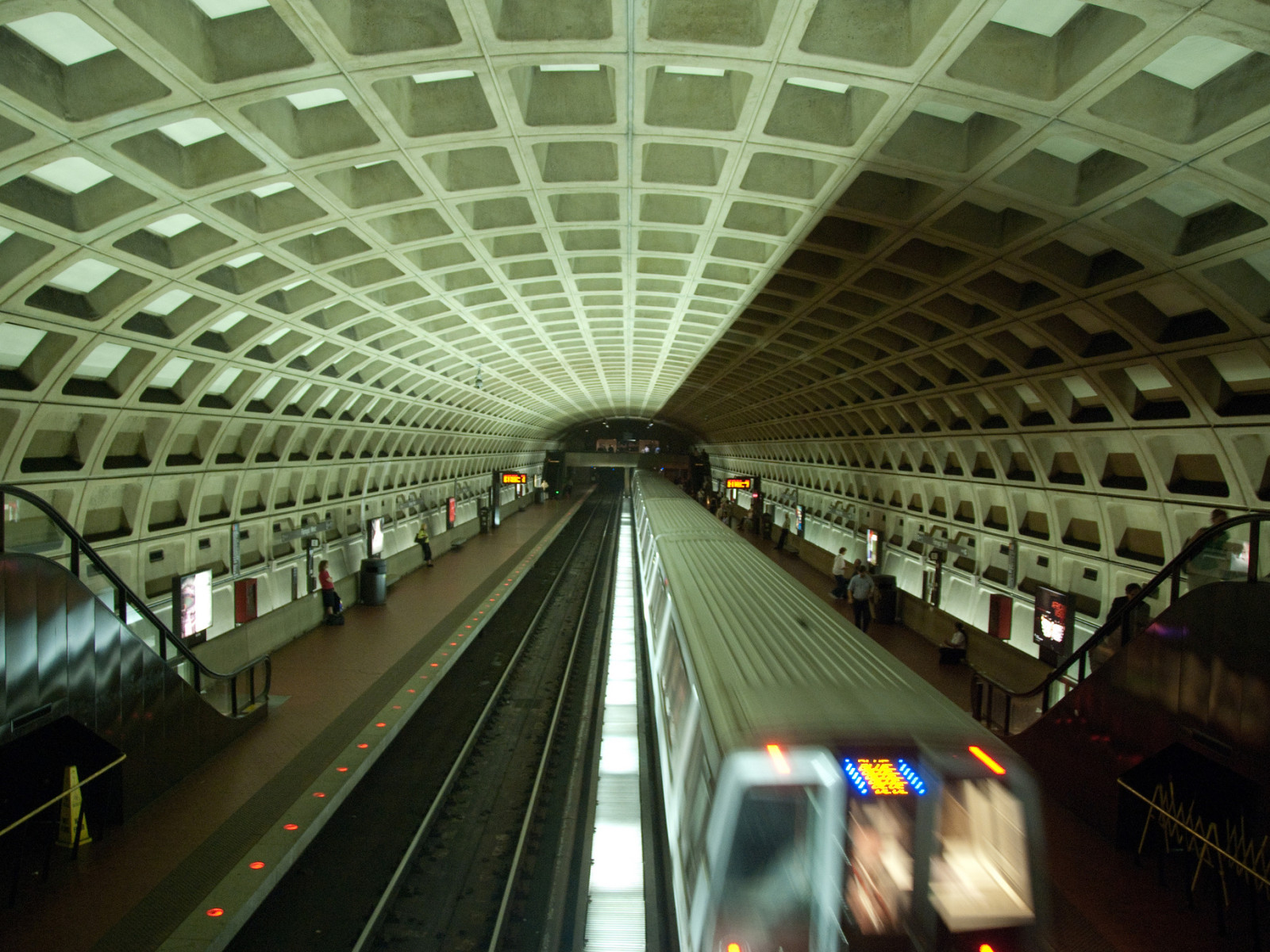
Photo by Flickr user through Creative Commons

Comments 1 Comment »

According to TBD, the Washington Metropolitan Area Transit Authority has issued a request for proposals from contractors to install what the request calls “Customer Information Electronic Display Signs” at important Metro stations and along high-usage Metrobus corridors. If all goes according to plan, the first 30 arrival data signs will be in place by the end of June.

While many bus stops won’t see the new technology installed for many months or at all, Wisconsin and Pennsylvania Avenues are probable candidates for early installation, which is good news for Hoyas commuting to and from work or internships downtown.

However, installing the signs is only the first step for a transit system that has increasingly become a joke. Real-time data displays for Metrorail are often incorrect, and displaying data doesn’t do anything to address Metro’s frequent rush-hour delays and mechanical breakdowns.

D.C. transportation blogger Kurt Raschke also challenged WMATA to use cheaper, open source options for the signs, instead of relying on an expensive IT firm. Citing the success of New York City’s BusTime, an open-source program that displays real-time info for Staten Island buses, he called for Metro to live up to it’s branding as “America’s Subway” and lead the country in exploiting new technologies

“WMATA should make a commitment to technological excellence, and part of that should include breaking away from the usual routine of squandering riders’ dollars on IT vendors who will, inevitably, overpromise and underdeliver,” Raschke wrote on his blog.

WMATA hopes to eventually install 800 signs in its roughly 2,400 Metrobus shelters in the region. To put these numbers in perspective, Metro services over 12,000 bus stops. High-usage stops with shelters, like those outside the social Safeway on Wisconsin, are likely to eventually receive real-time arrival displays.

Comments No Comments »

Last week, the Washington Metro and Transit Authority proposed changes to bus services in all areas of its jurisdiction. These changes include attempts to fix the rampant problem of buses running behind schedule, and eliminate late-night service that is less popular among riders.

But included in the services being cut, unfortunately for us on the Hilltop, are those belonging to two buses that are popular among Georgetown students. WMATA is proposing to stop running the G2 and the D2 buses late on Friday and Saturday nights. The G2, or P Street-LeDroit Park Line, picks up right at Healy Gates, and provides a convenient route to DuPont Circle and the U Street Corridor, both of which are popular locations for students on weekend nights. The D2, or Glover Park-Dupont Circle Line, makes stops in Georgetown and Burleith, and provides routes to Dupont and Farragut West.

But a few Georgetown students who don’t want to pay for cabs seems to be the only business that these two bus routes are getting on weekend nights, as the proposal refers to them as “low-productive.”

The other proposed changes to the Metrobus, however, come pretty welcome. Adjustments are being made on certain bus timetables to better reflect actual travel times, and among those being considered are the D1 and D6.

Although these adjustments have been proposed, this does not mean that they are going to take effect. As reported by Greater Greater Washington, WMATA will hold public hearings before making any final decisions.

Photo from TBD.

Comments 4 Comments »

Metro announced yesterday that the G2 bus, which runs from Georgetown’s main gates to Dupont Circle and Howard, will not go past Wisconsin while the District Department of Transportation conducts road maintenance on O & P Streets near the University.

DDOT will continue the work it began this spring repaving the streets and replacing the historic streetcar tracks that line P Street. The O&P Streets Rehabilitation Project will also allow DC Water to replace aging water mains in the corridor. The project is not expected to be completed until Fall 2012.

The G2 is rerouted “until further notice” according to signs posted at the main gates. Metro officials were not able to say when G2 bus service would return to the University’s front gates.

Comments 7 Comments »

Last Thursday, Metro’s board of directors approved an $109 million array of fare increases that will impact all forms of public transportation in DC.

The fare hike, which is the largest in Metro’s history, cannot go into effect until August at the earliest, according to the Washington Post.

During peak riding times, Metrorail’s boarding fare will rise to $2.20, while the cost for SmarTrip users will become $1.95. Off-peak boarding fares will increase to $1.85 for paper cards and $1.60 for SmarTrip. And sadly, riding Metrorail after midnight will soon come with peak fare charges.

The price hikes even reach to Metrobus fares—$1.70 for cash, $1.50 for SmarTrip.

In other words, the time is nigh to get yourself a SmarTrip card. Still don’t have one? The nearest CVS stores on Wisconsin Ave. and M St. both sell the plastic cards.

Enjoy those cheap Metro fares while we still have them, because next semester it’s going to be a bit pricier to leave Georgetown. (Which is something students do all the time, right?)

Photo from Flickr user chrisdag used under a Creative Commons license.

Comments 5 Comments »

In effort to close its daunting $189 million budget gap in 2011, the Washington Metropolitan Area Transit Authority is exploring a host of fiscal measures that involve raising fares, cutting rail service, and cutting bus service in 2011, including cutting buses to the Georgetown neighborhood (pdf, page 46).

Local blogger Georgetown Metropolitan is reporting that WMATA has proposed cuts which, if enacted, will eliminate eight late night buses that go to and from Dupont on the weekends. The following lines could be affected:

  • G2 – The G2 would experience a 33 percent reduction in weekend service. All Westbound service from Howard would end at 11:44 p.m. on Friday night and 11:47 p.m. on Saturday night. Service from Georgetown would stop at 12:18 a.m. on Friday and 12:22 a.m. on Saturday.

    WMATA would also space out all weekend buses by 40 minutes (currently, they run every half hour). On weekdays, it would lengthen the time between buses in morning peak hours from 10 minutes to 11 minutes, and the time between buses from 15 to 18 minutes during evening peak hours.

  • D2 — The D2 would stop running after 12:44 a.m. Friday night and after 12:55 a.m. on Saturday night—cutting a total of four buses a night.
  • 31 — Cut six westbound and four eastbound buses from the early morning weekday lines, and cut four buses from early weekend morning lines.

GM makes the excellent point that G2 buses are so frustrating to wait for on weekends already that the ten minutes of added headway on their Saturday and Sunday lines could render them almost useless. Between this, and the maddeningly long new routes GUTS buses will be taking under the 2010 Campus Plan, future Georgetown students may find themselves sealed even more tightly in their Georgetown bubble.

Comments 1 Comment »

No matter how poorly your 4th of July went, it’s safe to say it was probably better than former “Mayor for Life” and current D.C. Councilmember Marion Barry‘s (D—Ward 8). Saturday evening Barry was arrested by the Park Police and charged with stalking his ex-girlfriend, Donna Watts-Brighthaupt.

The stalking charges were dropped on Wednesday, but not before it was revealed that Watts-Brighthaupt received $20,000 in city contracts after her relationship with Barry began. City Paper‘s Loose Lips columnist (and former Voice EIC!) Mike Debonis got the scoop of the week when he obtained recordings of some of Barry and Watts-Brighthaupt’s phone conversations, leading to the greatest City Paper cover line of our time: “You put me out in Denver ’cause I wouldn’t suck your dick!

Meanwhile, the fallout from the Red Line crash continues. A couple more lawsuits have been filed against WMATA and commuters are getting cranky about the delays and crowding caused by the ongoing investigation. Metro also announced that it is planning a $177 million overhaul of the line to begin in 2010.

After months of fights about whether or not the recognition of same-sex marriages could be put up to a referendum vote and concerns about congressional interference, D.C. officially started to recognize same-sex marriages performed in other states at 12:01 a.m. this Tuesday. D.C. Councilmember David Catania (I—At Large) is expected to introduce legislation that will allow same-sex marriages to be performed in the District soon.

After the jump: Metro’s new “one strike” texting policy, the Onion takes on the Nat’s kiss-cam, the summer youth jobs program is going broke, and more!

Read the rest of this entry »

Comments No Comments »

National Transportation Safety Board investigators are getting closer to pinpointing the cause of last week’s Metro crash.  They discovered that WMATA had replaced a crucial component of the signaling component, the “Wee-Z bond” which maintains a safe distance between trains, and it malfunctioned.  There have already been a couple lawsuits filed against Metro, including one by Johnnie Cochran’s law firm.  WMATA General Manager John Catoe announced that the system will keep operating in manual mode until outside experts have a chance to examine the signaling system, which could as long as a year.

In some rare “good on you, WMATA” news, the embattled transit agency just re-launched its NextBus service this Wednesday.  NextBus allows you to see when the next bus will be arriving for any route and can be used from the internet or a cell phone.  The service was launched as a pilot program about two years ago for 32 routes, but it was only 80 percent accurate.  The improved version covers all 335 bus routes.

Harriette Walters, the D.C. Office of Tax and Revenue employee who masterminded the largest embezzlement in city’s history, was sentenced to 17 and half years in prison.  It was revealed in 2007 that over the course of two decades Walters’ had defrauded the D.C. government to the tune of $48.1 million through issuing tax refunds to fake businesses.

Speaking of OTR, this year they mistakenly sent tax refunds to people who actually owe the District taxes. One resident who got the unmerited refund was D.C. Councilmember David Catania’s (I—At Large) parter, Brian.

After the jump: the Washington Post wipes out, medicinal marijuana makes progress, legal fireworks fun and more.

Read the rest of this entry »

Comments No Comments »

On Monday at about 5 p.m. two Red Line trains crashed into each other near the Fort Totten station, resulting in the deadliest crash in Metro’s 33 year history.  Nine people died, including Jeanice McMillan, the operator of one of the trains, Ana Fernandez, a mother of six, and Retired Major General David Wherely, Jr. who led the D.C. National Guard and his wife Ann.  Although investigations are ongoing, it’s looking like the accident was probably caused by a malfunction of the computerized control system.

D.C.’s Chief Financial Officer Natwar Gandhi announced that his office is projecting a $340 million budget shortfall over the next two years due to the recession.  In light of the dire news, Mayor Adrian Fenty (D) discretely ordered 40 government agencies—including the police department—to cut more than $35 million from their budgets.  It probably doesn’t help that the city can’t find thousands of dollars it collected in fines from misdemeanor cases..

On Thursday, June 18th, a gunman opened fire outside the Columbia Heights Metro station, shooting and injuring two.  This week it was revealed that the gunman was actually working as an intern for a D.C. Councilmember, Jim Graham (D—Ward 1).  Graham himself took the young man, Devyn Black, to the police station to turn himself in.

After the jump: taxi fare increases, how Twitter can help you get fired from your D.C. government job and more!
Read the rest of this entry »

Comments No Comments »

Could GUTS be a thing of the past?

Greater Greater Washington, a blog about smart growth in the D.C. Metropolitan area, tackled the GUTS bus question yesterday and concluded that everyone would be better off if we just relied on the D:

Why does Georgetown need a shuttle from campus to Dupont Circle at all? Right now, there’s a bus that goes right from the Reservoir Road side of campus to the same intersection of 21st and Q that GUTS uses: the D3 and D6 buses. The route is identical, except the D buses stop on Reservoir instead of looping around Lot A just inside campus …

We could improve transit for all if Georgetown applied the money it spends on the Georgetown-Dupont route to WMATA to add service to the D3 and D6, and subsidize students’ rides on them. If the D buses stop too often along the way, we could even create a D9 express bus … Besides, the GUTS schedule estimates a 15 minute trip from Georgetown University to Dupont Circle, while the WMATA schedule actually claims it’s even less than that.

It’s an interesting idea in theory, but there would be some major hurdles. Setting aside concerns about how mind-numbingly complex and the occasionally unreliable D.C.’s bus system is, would the University really be able (or willing) to negotiate with WMATA to create a suitable express route?

And, if we managed that, how would bus rides be paid for? Would the University provide SmarTrip cards to everyone and, if so, how would it be administered? If the stalled Student Metro Discount campaign is any indication, negotiating large-scale deals with WMATA isn’t quite as easy as it might sound. And if the University doesn’t subsidize the trips, would riders have to pay out of pocket?

If the University eliminated GUTS buses but worked with WMATA to augment the D line, would that do anything to pacify the neighbors? Also, GGW’s suggestion doesn’t take into account any GUTS lines besides Dupont. Even if we could work something out for that route, what about the others?

But what say you—would expanded D line coverage be an acceptable GUTS substitute?


Comments 4 Comments »